|
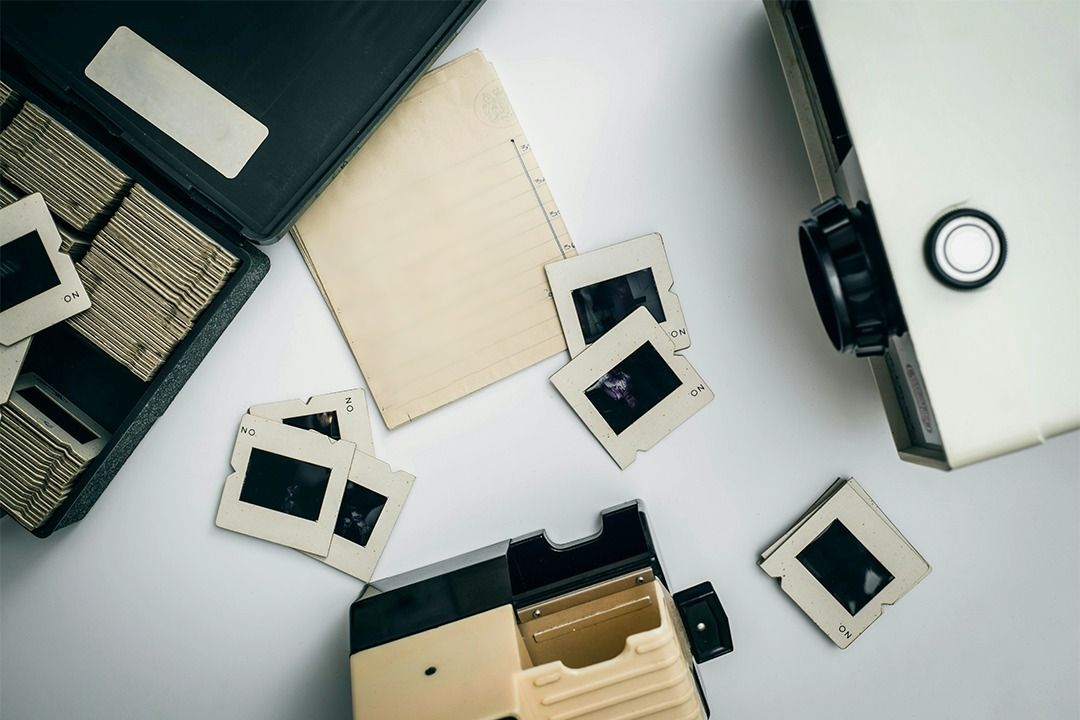
What I held in my hands was a complete visual testimony of one of the greatest human migrations of the century. Real history. The kind of work that deserved to be seen by anyone trying to understand how the modern world was shaped.
Nobody had seen it. Nobody ever would.
That summer, two things happened inside me simultaneously.
The first was clarity. Sitting with those slides, I knew with absolute certainty what I wanted to do with my life. Travel. Connect with people and communities. Tell the stories of our time. Become a visual storyteller.
The second was something harder to name.
A quiet, persistent sadness. Because I was the only one looking. Because his life’s project was sitting in a box. Reaching no one. Contributing nothing.
That contradiction never left me. Years later, I found myself repeating his pattern.
I was traveling, photographing, developing my voice, doing the work I believed in. And the photographs were going straight into hard drives. Accumulating digital dust. Reaching no one.
I wanted those stories seen in major publications, exhibited in festivals, encountered by the people who needed to encounter them. But I didn’t know how the industry worked. I didn’t know who to approach, how to position the work, or how to build the bridge between making something and sharing it with the world.
The pattern my grandfather lived, powerful work, no audience, no impact, was repeating itself in my career.
Until I understood something that changed everything.
The work is not the problem. It was never the problem. The problem is what happens after.
Most documentary photographers put everything into the making, developing their eye, their voice, their projects.
And then the project ends, and they have no clear direction. No positioning. No understanding of how to move the work toward the people and institutions that should encounter it.
So it stays where it started. Archived in hard drives. Not because it lacks value. Because it lacks structure, distribution, and understanding of what to do with the work once it is created.
This is the part no one teaches photographers to do.
That frustration of feeling invisible became the engine for everything that followed.
It drove me toward the cover of the New York Times, toward long-term stories for National Geographic and TIME, toward exhibitions across five continents, and toward building a financially sustainable career doing exactly the work that matters to me.
None of that came from talent alone.
It came from understanding how to connect the work to the world. How to build a path that moves stories from hard drives to the people and places they were made for. Toward publications, exhibitions, partnerships with organizations, and real opportunities to make a contribution.
Because the story that nobody sees changes nothing.
That is what I’ve spent the last years building through my mentorship at PhotoDocumentarians.
The photographers I work with don’t just get more visibility. They become clearer. About their work, their voice, and where they want to take it.
That clarity is what creates real opportunities. Publications. Exhibitions. Grants. Assignments. And it starts with understanding what to do with a project once it exists.
That is what this conversation is about.
And over the next few weeks, I’m going to share the core of it here, with you.
Not the advice most photographers keep receiving:
Shoot more. Follow your heart. Be patient. Someone will find you.
That advice is not wrong. It is just incomplete. And incomplete advice costs years.
This is the most important conversation I’ve had with this community.
I’m glad you’re here for it.
More on Friday,
Sebastian
P.S. My grandfather’s photographs still sit in a box. The stories in them never reached anyone. I have never stopped thinking about that. Not when I consider keeping my own work to myself. Not when I work with a photographer who is doing the same.
|